On Thursday 22 October 2026, a room full of media people gathered at the Richfield Auditorium in Bryanston to celebrate a book. That does not happen often in our industry. It was a lekker evening with media friends old and new.
The Advertising Media Association of South Africa (AMASA) launched Mastering Media Planning: Where Art & Science Meet, the first new edition of its industry textbook since 2017. The launch brought together the authors, the AMASA Education Committee and the editorial and design teams for presentations, a panel discussion and plenty of conversation afterwards.
I was there as one of the contributors, as I wrote Chapter 8, Print Media: Magazines.
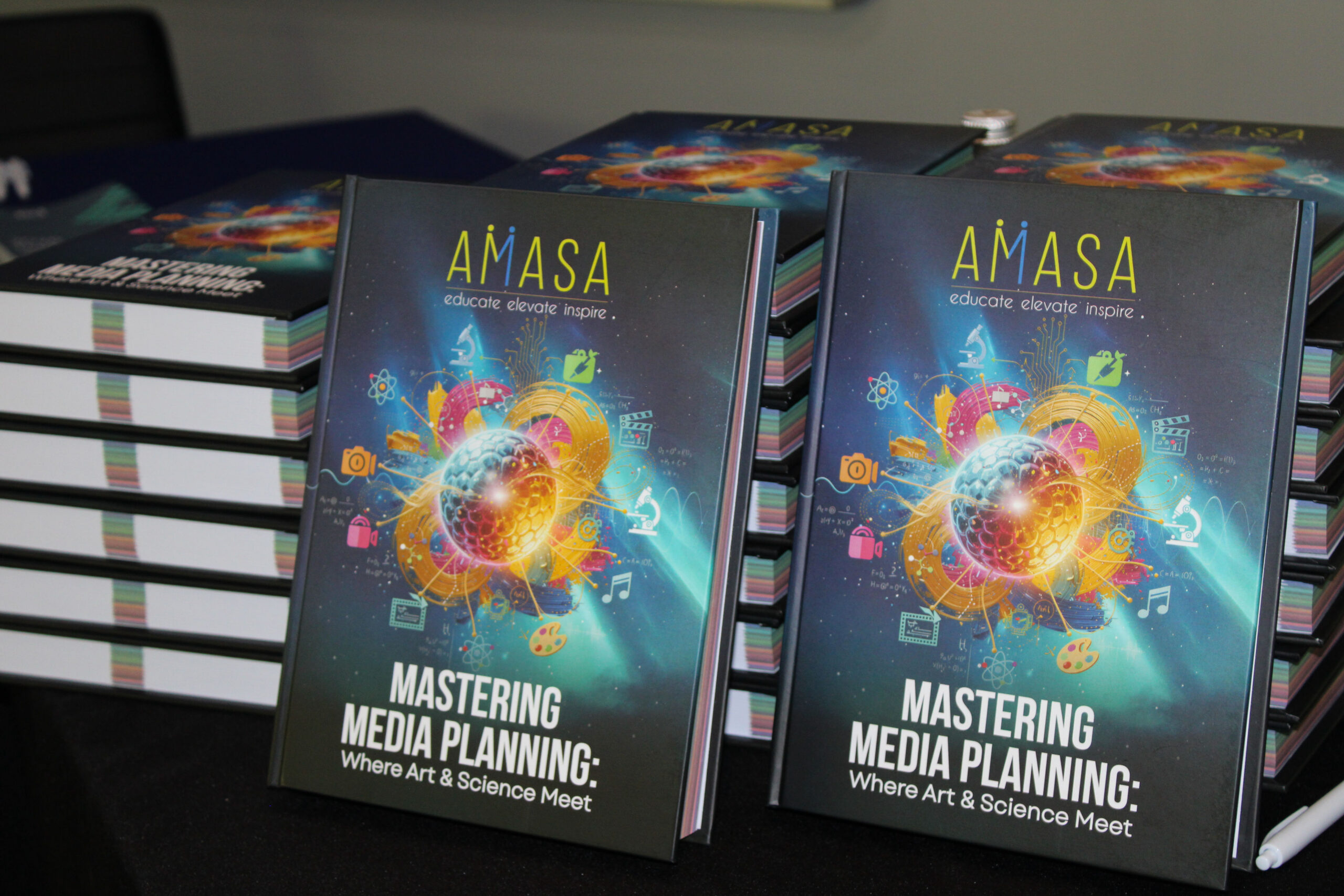
Mastering Media Planning: Where Art & Science Meet, AMASA’s new industry textbook
A textbook written by the industry
AMASA’s mission is to educate, elevate and inspire. This book puts the first of those three words into print.
South African media practitioners wrote the chapters. The book is prescribed for full-time and part-time students entering the media industry, so every chapter had to be clear enough for a first-year student and current enough for a working planner.
It is also the core text of the Media Management Competence Certificate, which AMASA presents with the AAA School of Advertising. The certificate is accredited at NQF Levels 5 and 6, runs over four months in a hybrid format and includes an industry masterclass led by the textbook’s contributors. The book is included in the course fee. Registration for the next intake closes on 22 January 2027.
Our chapter on magazines
Rob Smuts of RMS Media approached me in December 2025 to update the magazine chapter. The brief was clear. Keep the basics a newcomer needs, show where the magazine industry stands today and explain, from a media advertising perspective, how it keeps changing. Use contemporary examples and write for an entry-level reader.
Magazines are close to our hearts. Kim Browne and I started Twisted Toast Digital in 2011 after many years in magazine publishing. My own career included titles such as MagFocus, FHM and heat. These days we work on the multiple award-winning Poultry Bulletin.
That experience shaped the chapter. Media planners do not need to know how to put a magazine together, but they do need to understand why readers choose a magazine, how a title builds a loyal audience and what that audience is worth to an advertiser.
The magazine business has changed more in the past decade than in the half-century before it. Many titles have closed. The strongest brands now reach their readers through digital editions, newsletters, social channels and events as well as print. Specialist and brand magazines continue to serve audiences that general media cannot reach as well. The chapter sets out to give students that current picture.
Rob was generous in his response to my first draft in January. The language editor and the AMASA team then took the chapter through several rounds of checks before the book went to print in June.
“We wanted every chapter to reflect the industry as it works today. Louis kept the fundamentals students need, brought the state of the South African magazine industry up to date and wrote it in language a first-year student can follow. That is exactly what a textbook should do.”
Rob Smuts, CEO of RMS Media and a member of the AMASA Education Committee
The people behind the book
A textbook like this depends on the goodwill of busy people, because AMASA is led by industry volunteers. My thanks go to AMASA Chairperson Memoria Masilela and the AMASA Education Committee, especially Rob Smuts, Professor Thérèse Roux of the Tshwane University of Technology and Claire Herman, as well as my fellow contributors and the editorial and design teams who turned many manuscripts into one book.
AMASA honoured the contributors on the night. I was touched to receive a gift and the recognition that came with it.
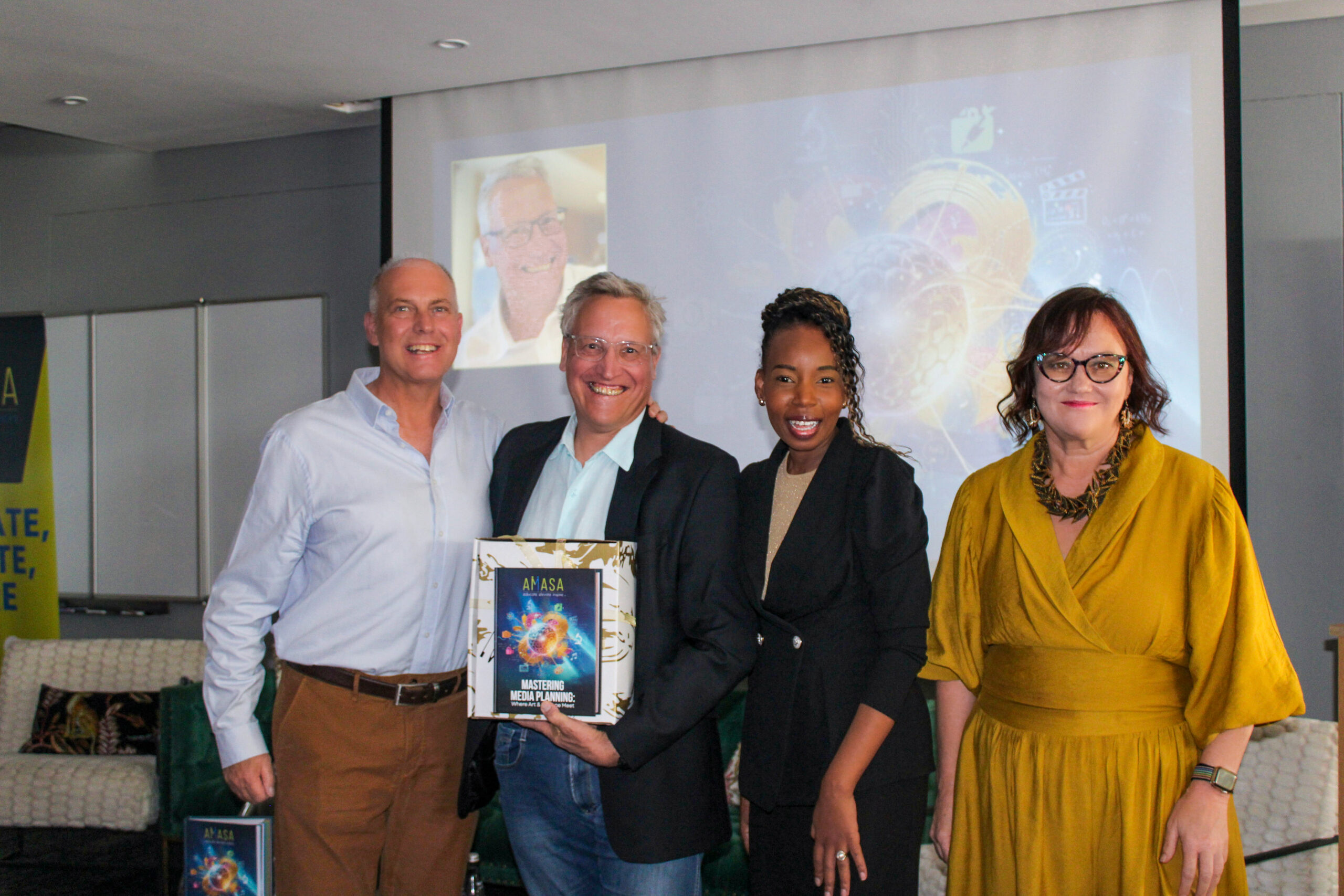
Rob Smuts, Louis Eksteen, Memoria Masilela and Thérèse Roux at the launch of Mastering Media Planning in Bryanston on 22 October 2026
Why it matters
Our industry often talks about its skills gap. Books like this are one practical answer. They give young people a shared foundation written by the people who do the work. They also open a route into a career that rewards both creative thinking and careful analysis.
That is where art and science meet.
For more about the book and the Media Management Competence Certificate, visit amasa.org or email info@amasa.org.za.